


Over the past few years — well, actually, ever since the news of Ronzoni discontinuing the pastina pasta shape shattered hearts and stomachs everywhere back in 2023 — pastina has been having quite the moment. The "Italian penicillin" soup is arguably the most delicious dish you could make with pastina, and it's also pretty much everywhere these days; if your social media feeds are anything like mine, you've probably watched hundreds of recreations of the iconic dish with unique spins. Veggie-packed! Immune-boosting! Protein-forward!

Despite the many variations, I still think the original pastina recipe, thanks to its practicality and stick-to-your-bones heartiness, might be the ultimate sick season comfort food. Frankly, it's also a terrific "any season" comfort food, and a great rent week meal, to boot.
Pastina is a thick-and-creamy "soup" made by boiling tiny pieces of pasta in water or broth until it reaches a porridge-like consistency. Essentially, it's the Italian (and Italian American) answer to chicken noodle soup. Feel a cold coming on? Eat some pastina, hence the "Italian penicillin" of it all.

Variations online are, as promised, endless. Some use a tempered egg to lend creaminess. Others use milk as the main liquid. One TikToker even adds some finely-chopped veggies for a little nutrient boost, but the one common thread between all pastina-lovers is that everyone feels strongly about their personal spin on it.
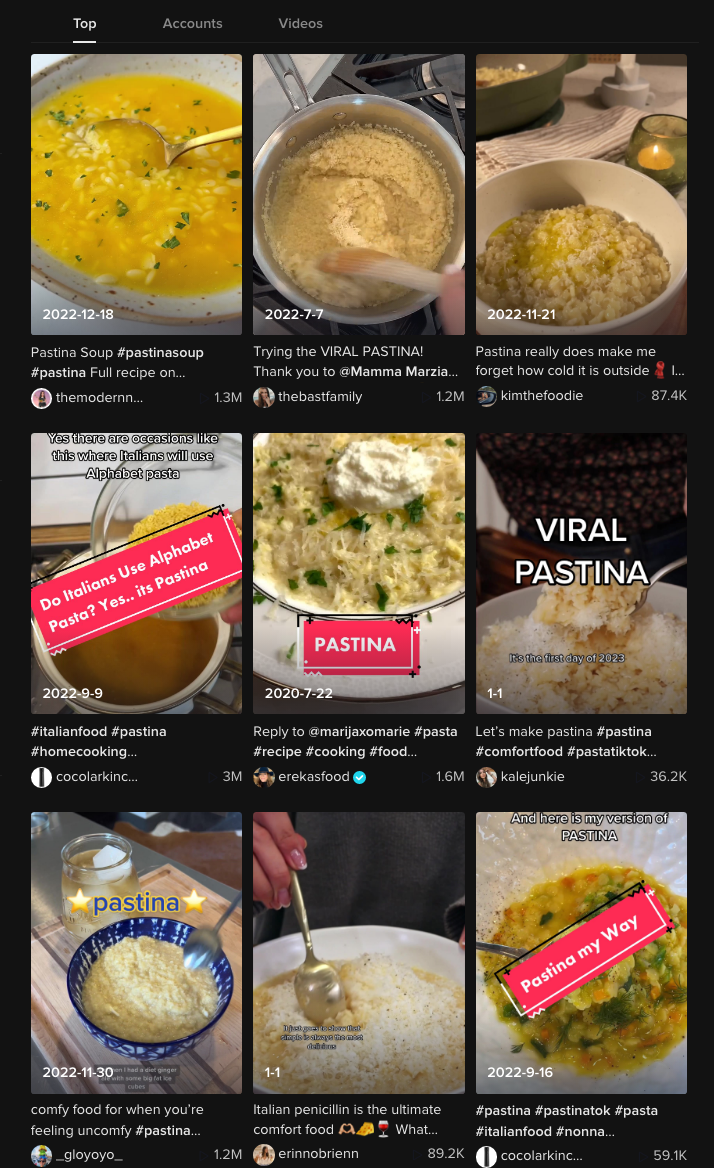
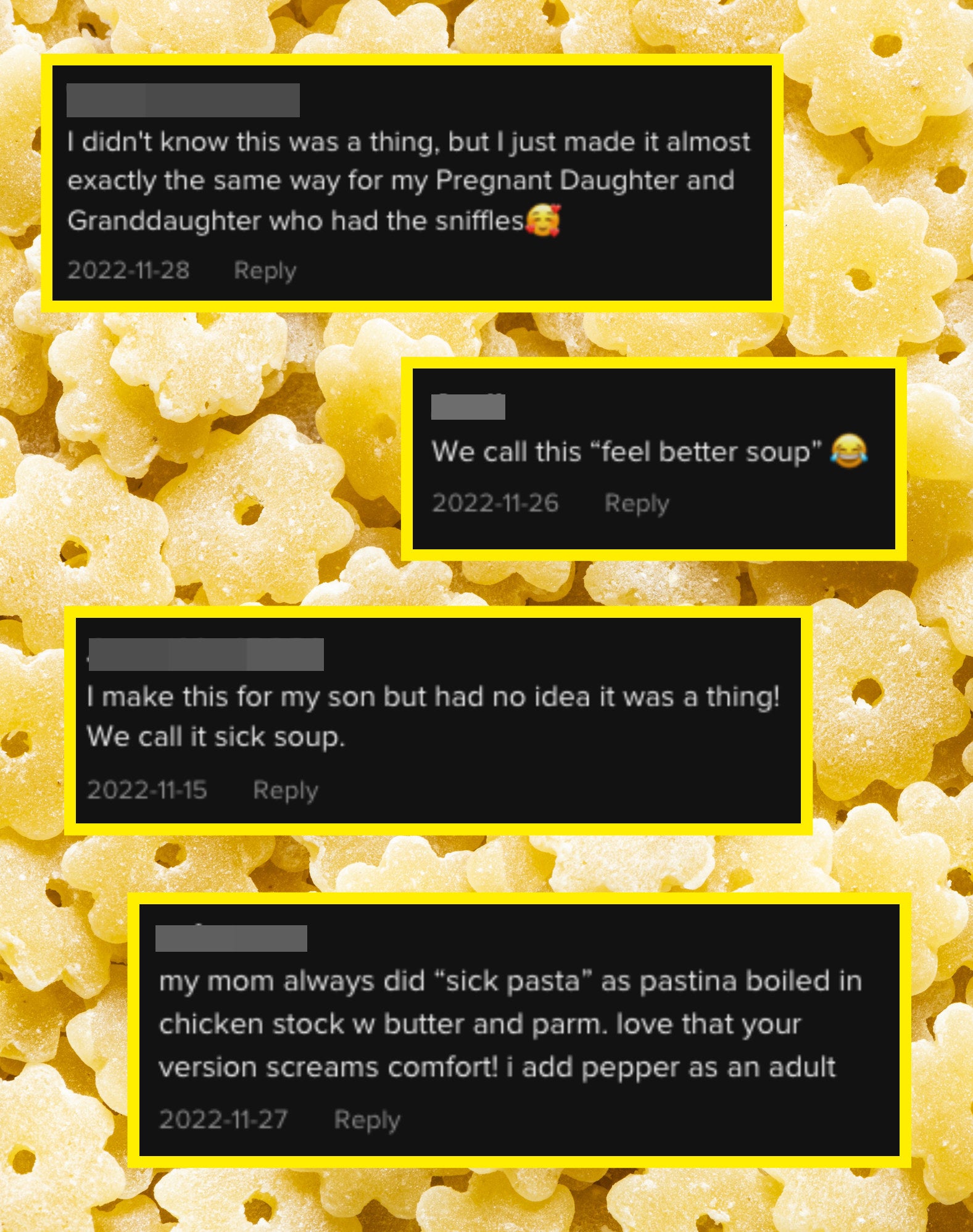
This brings us to my favorite version. I was first introduced to this dish by a high school friend; I became obsessed with it after my first hesitant bite, and we'd often throw it together as a late-night snack ever since that fateful day. I still make it all the time, tweaking quantities and ingredients throughout high school, college, and adulthood. You can imagine my surprise when I realized, thanks to TikTok, that this "secret" family recipe I had been making for nearly 15 years was actually a wildly popular sick food...but that's life, folks. Unique experiences are a myth.
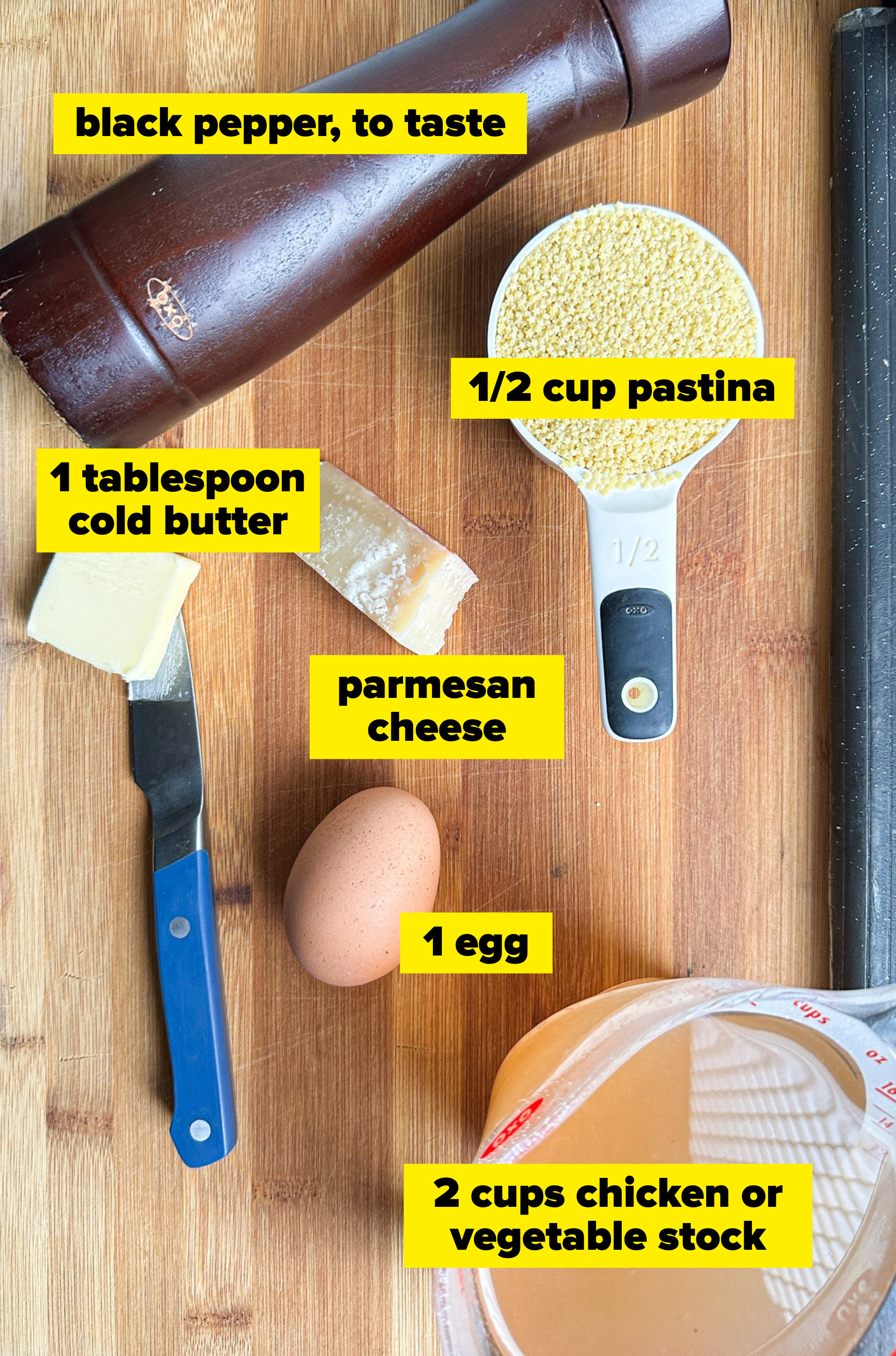
Here's exactly how you can make the version of pastina soup that I've fallen head over heels in love with, which just so happens to be vegetarian if you use vegetable stock or broth. And if you finish this post and think, "Wait, this isn't what I grew up with," I've also included several variations at the very end. First, the ingredients:
STEP #1: Add your stock to a medium saucepan and bring it to a boil, then stir in your pastina and reduce the heat to low. Simmer for about 5-6 minutes, stirring frequently, until most of the stock is absorbed — but not all of it! More on this shortly.

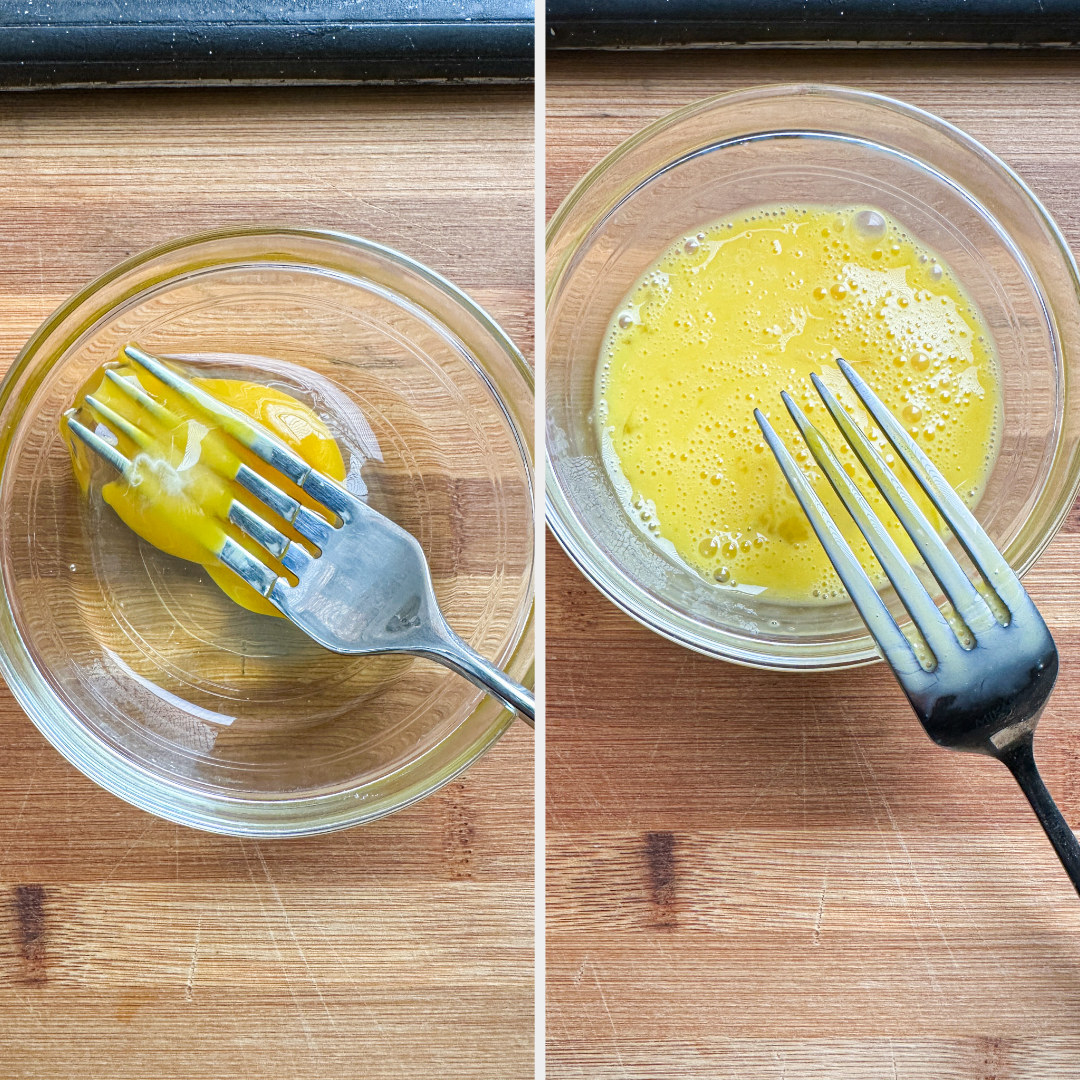
STEP #2: While the pasta simmers, whisk the egg in a small bowl until completely combined.
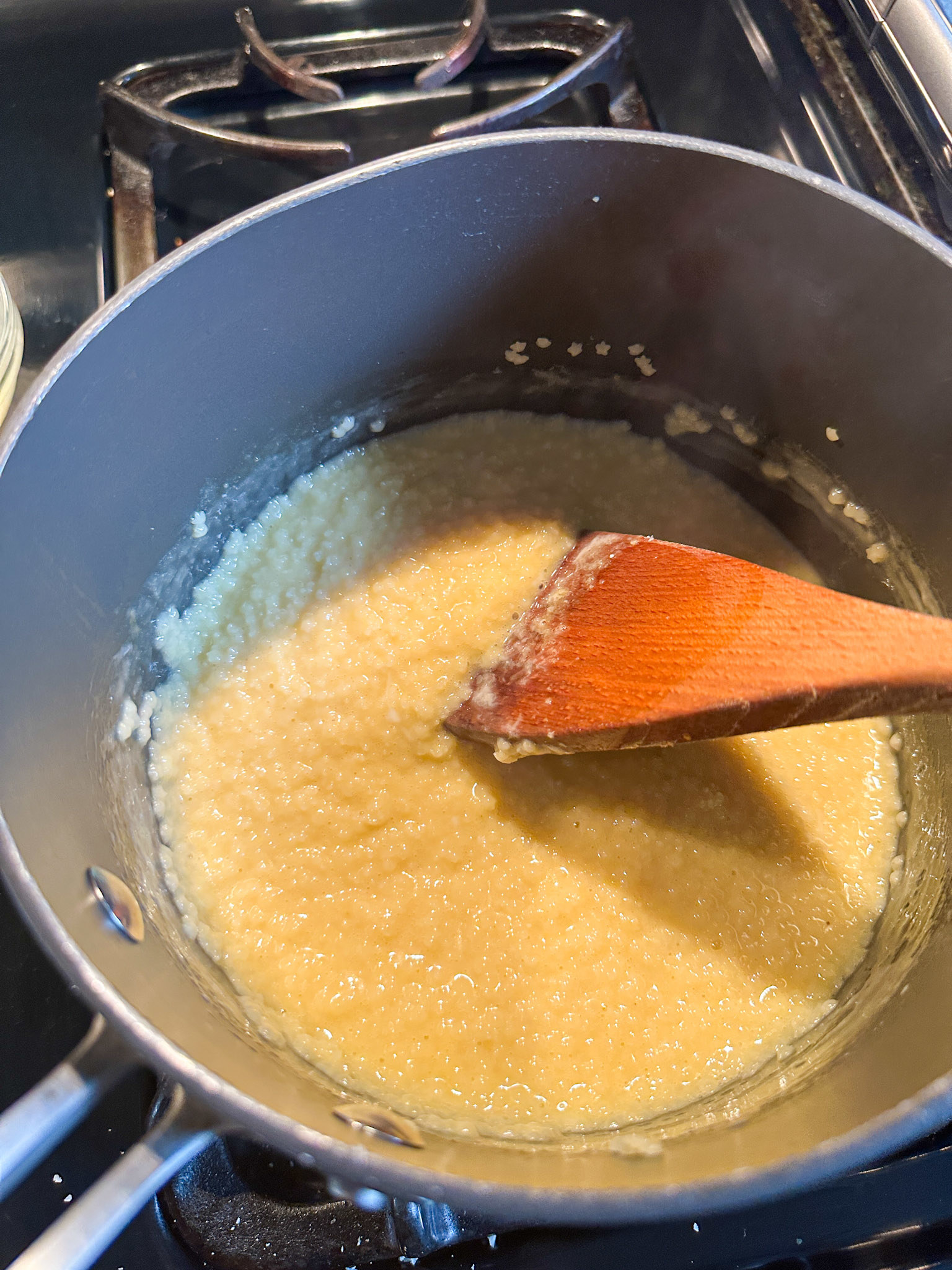
STEP #3: When you have just a bit of stock remaining in your saucepan, turn off the heat completely.
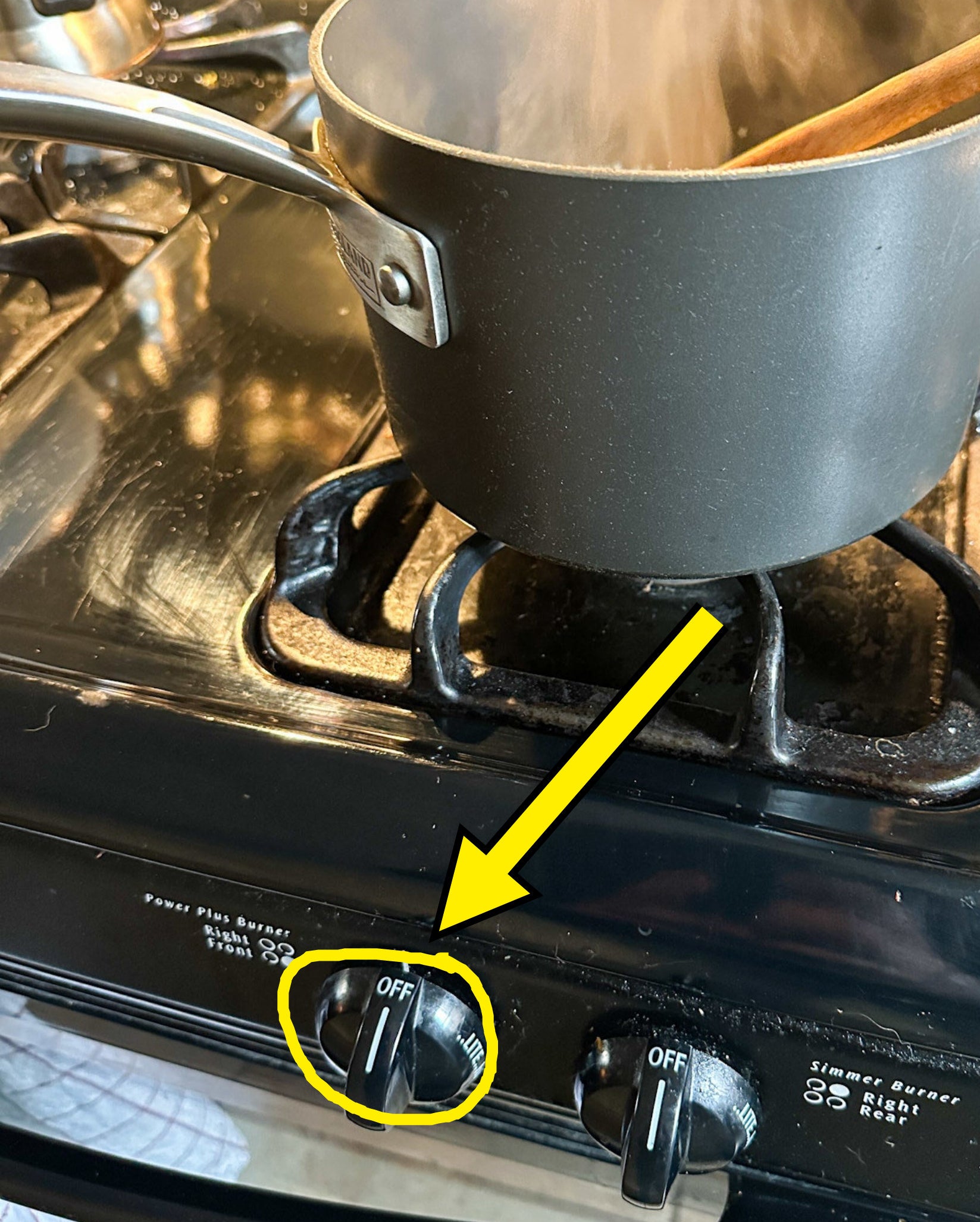
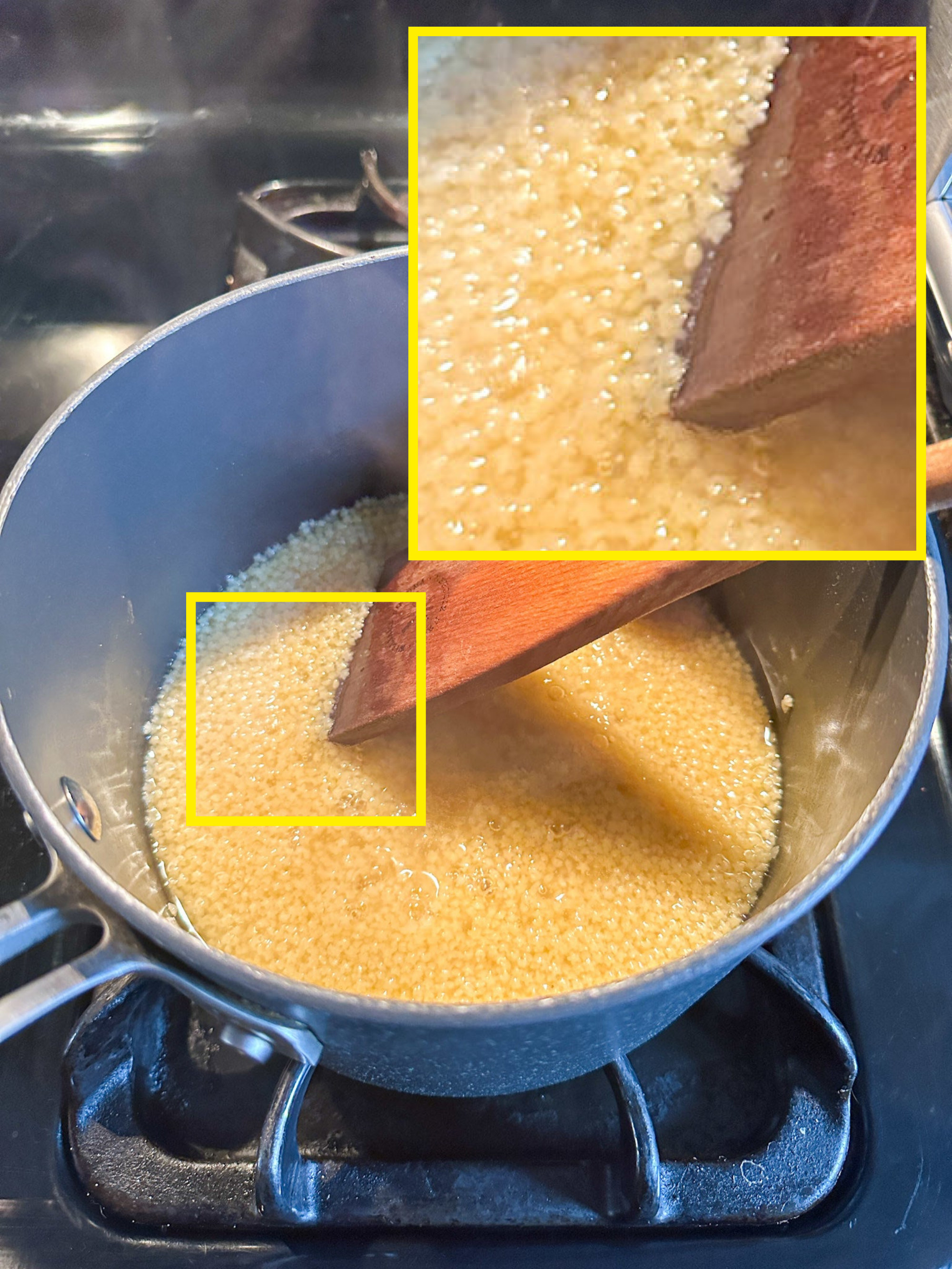
By "just a bit of stock," I mean that the pasta should be showing just underneath the surface of the simmering stock. For my visual learners out there, here's what I mean:
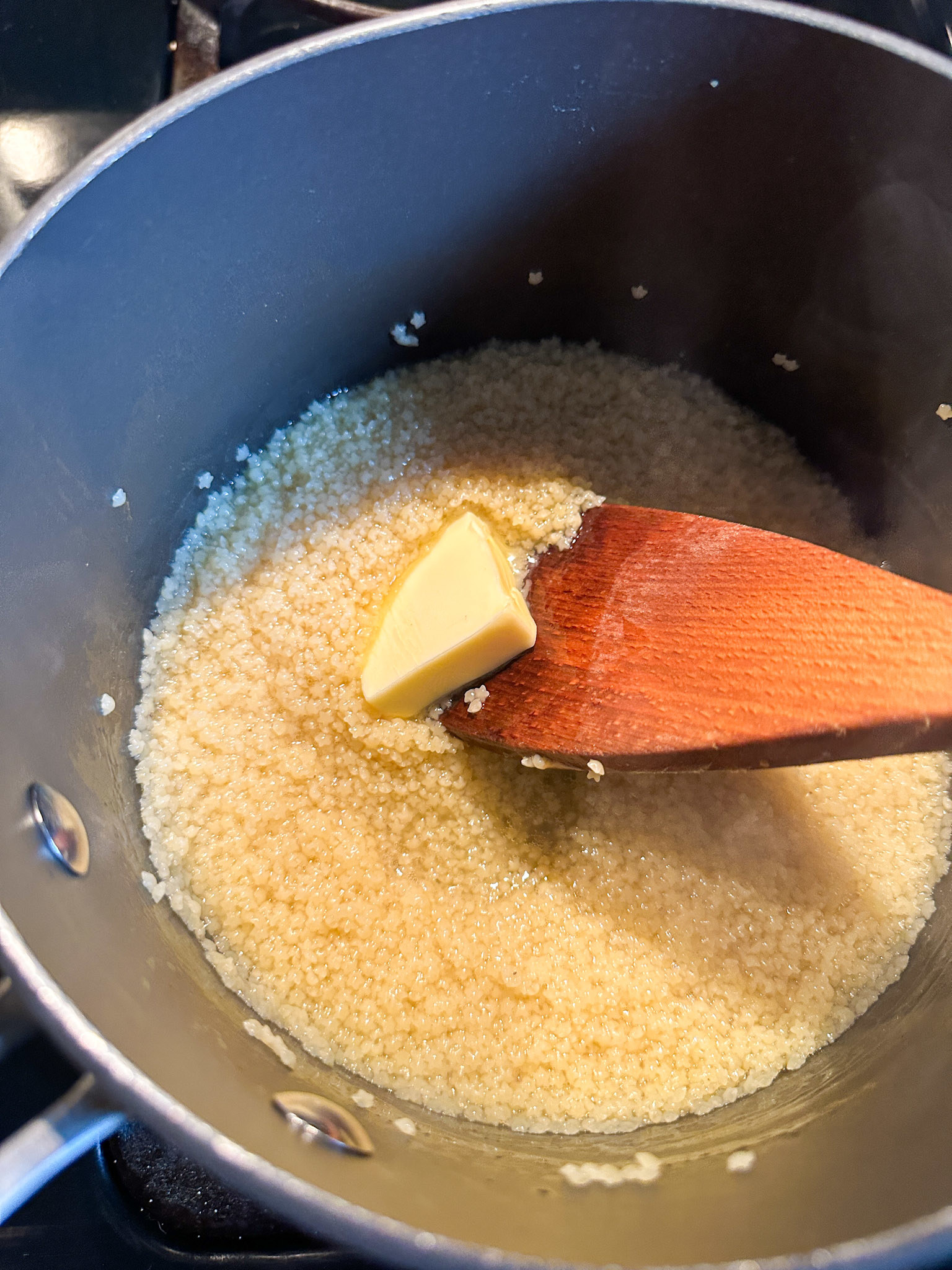
STEP #4: Mix in the remaining ingredients one at a time. Trust me, y'all — I've made a LOT of pastina, and I've found that the one-at-a-time method is the easiest way to make sure you wind up with a creamy, velvety bowl of deliciousness instead of scrambled eggs. First, stir in the butter until fully melted.
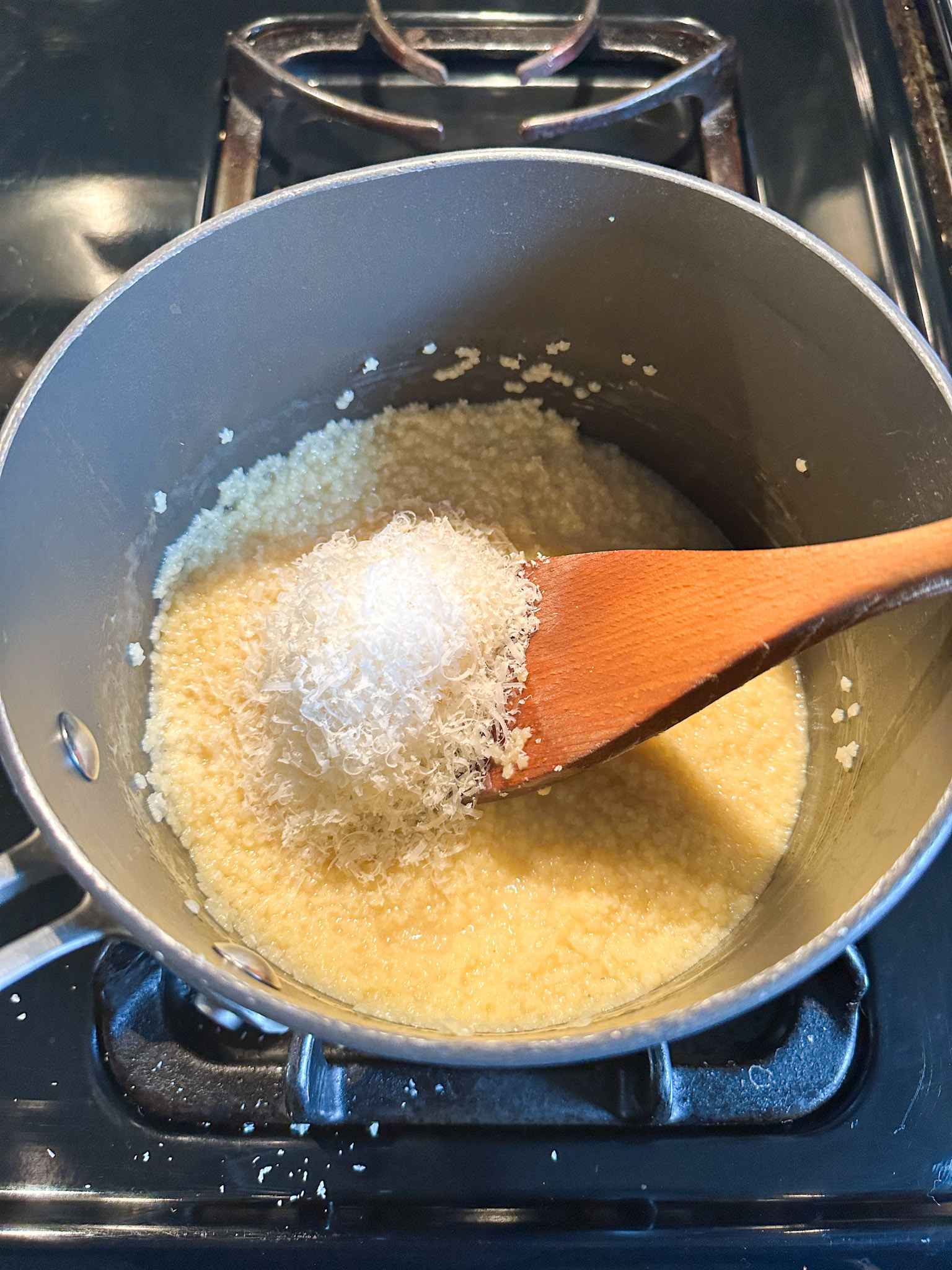
Next, the Parm. If you're grating it fresh, as I did, aim for about a 1/2 cup — but TBH, measure with your heart here. You cannot overdo cheese.
Last is the egg. As demonstrated by yours truly in this chaotic GIF, in which I use a crusty burner as my tripod, pour in the beaten egg while vigorously stirring the pastina mixture.

You'll wind up with glossy, clump-free results.
That's it! To serve, ladle the pastina into bowls and top with lots of black pepper and extra Parm.
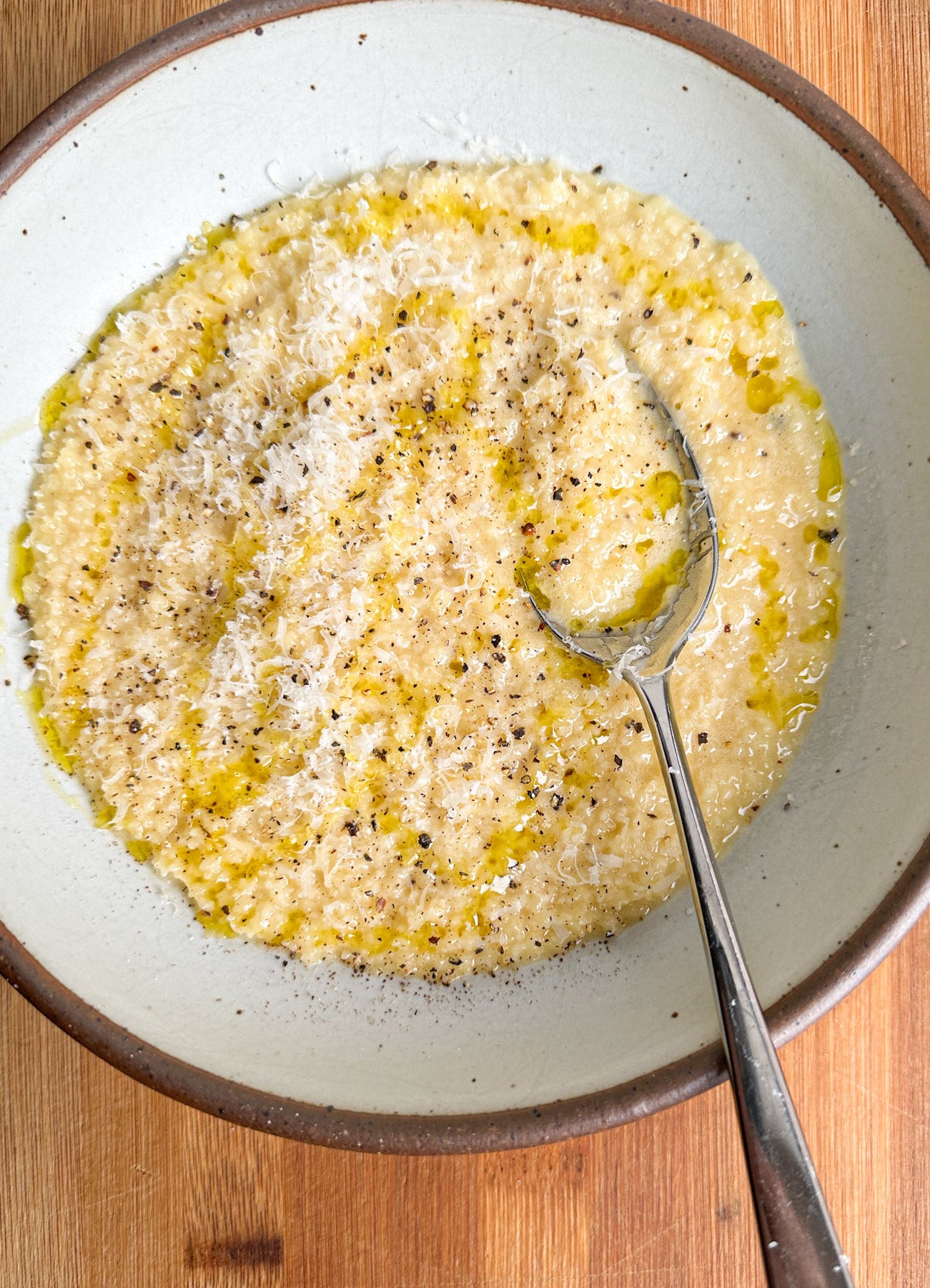
Not to state the obvious, but yeah, it's absolutely delectable whether you're as sick as a dog or the epitome of health. IMO, pastina actually has a lot going for it when compared to most soups. It takes just about 10 minutes to make from beginning to end, and it's a lot more filling. Not for nothing: Since it's super thick, it's even easier to eat than chicken noodle soup. Like, you can eat this while practically horizontal in bed and not worry about dripping hot broth all over your sheets. If that's not a cold season win, I don't know what is.

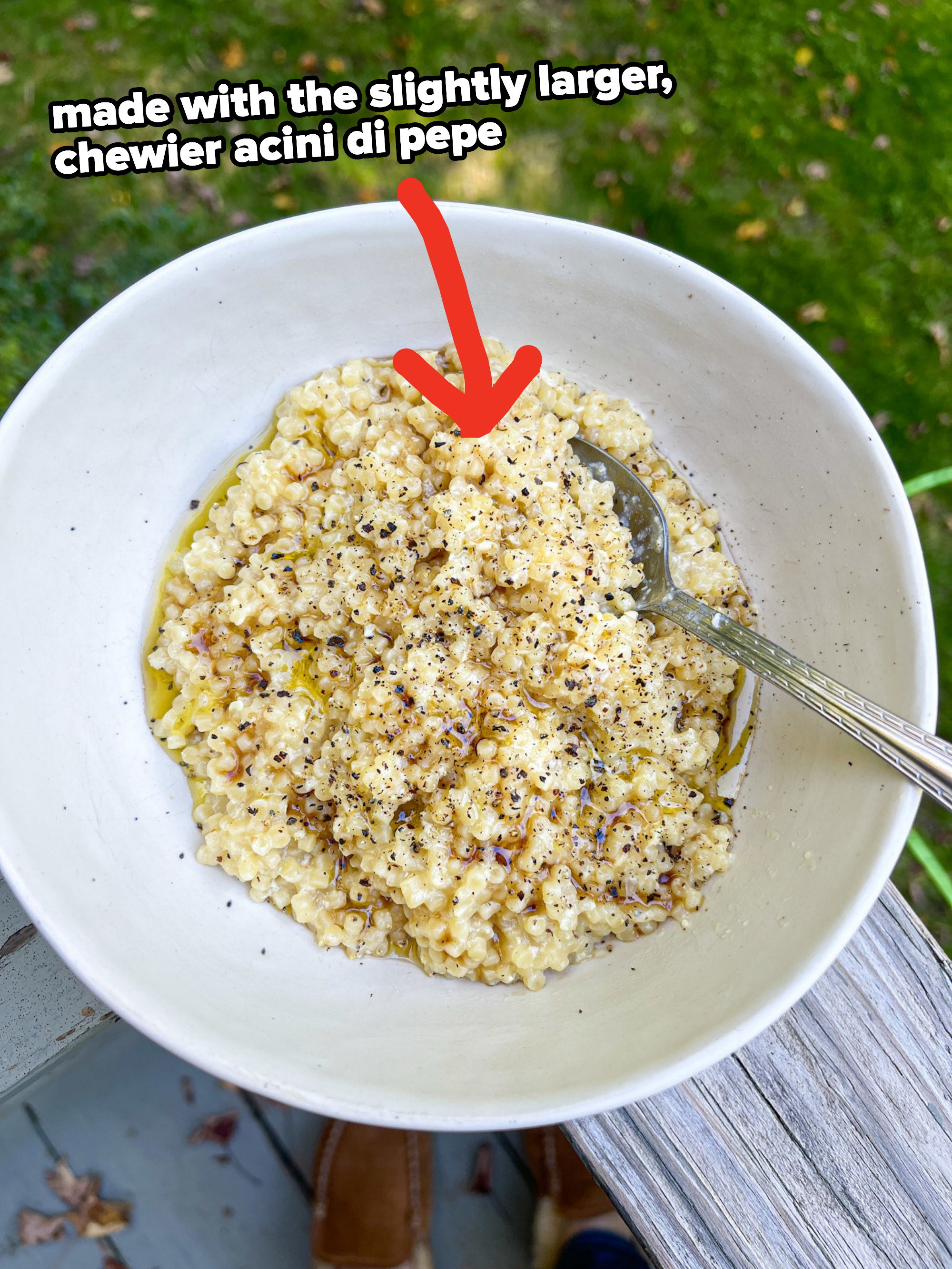
If the Great 2023 Ronzoni Discontinuation of Pastina affected your ability to find pastina at your local grocery store, I'll also let you in on a little secret: You can basically use whatever teeny, tiny pasta shape you can get your hands on since "pastina" in Italian is a blanket category for any small pasta — not just the Americanized star shape. My go-to shape for pastina is actually acini di pepe, but it's your pastina, not mine. Make it as you wish. If you're a kid at heart and want to use alphabet pasta, by all means, go for it.
For those of you who read the recipe above and are now thinking to yourselves, "This is NOT the version I grew up with," never fear. As mentioned, pastina recipes tend to differ pretty heavily from person to person, so here are some equally tasty variations that are totally worth trying if you'd like:
• "Secret Veggie" Pastina — Simmer any veggies of your choosing in just enough stock to cover them until they're completely soft (think carrots, celery, onion, cauliflower). Transfer the softened veggies and stock into a blender and process until completely smooth. Cook your pastina per the directions above, using this thick, veggie-enriched stock in place of your usual stock or broth.
• Brothy, No-Egg Pastina — Use double the amount of stock called for in the recipe above, omit the egg and butter, and wait to add your Parm and black pepper until you've ladled the soup into bowls for serving. This version is especially great for small kids, FYI!
• Pastina with Veggies — Sauté some finely diced onion, celery, and carrot in butter or olive oil until just softened before adding your stock and bringing everything to a boil.
• Chicken-y Pastina — Start with the method for either of the variations above (it's up to you!), adding pre-cooked shredded or cubed chicken to the boiling stock at the same time you stir in the uncooked pastina.
If you try this recipe or one of its variations in your own kitchen, let me know what you thought of it in the comments below or by DMing me. (And if you have a secret family method for your version of pastina, please, please, please tell me all about it.)
Comments